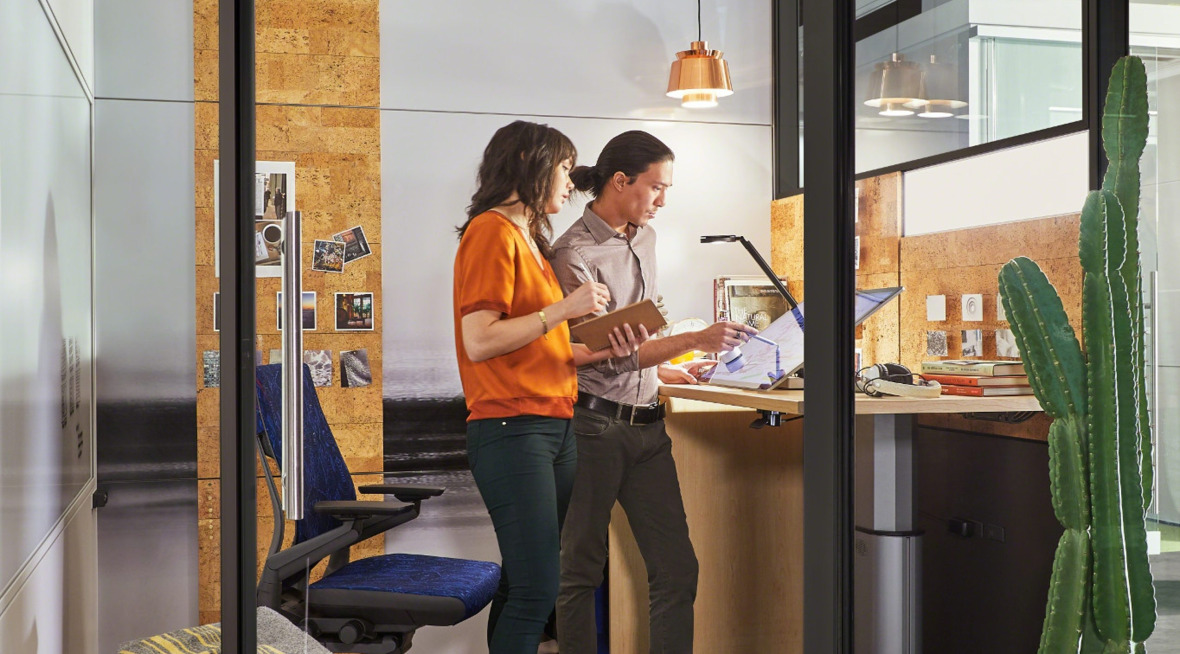
Traditional hierarchical office designs with rows of cubicles and executive suites have given way to more inclusive workspaces. Companies are increasingly adopting open floor plans and worker-friendly spaces, fostering collaboration among employees at all levels and reinforcing the notion that every individual’s contribution is valued.
Elevating beyond mere ADA compliance, these modern layouts not only guarantee accessibility for all employees, but also open doors to hiring the best and brightest talent, irrespective of any physical challenges they may encounter.
Diversity of setting
Recognizing that individuals thrive in diverse settings, DEI workspaces offer a range of versatile options to accommodate varying preferences. Quiet pods and private areas cater to those seeking focused solitude, while huddle rooms and communal desks facilitate collaboration among team members.
Conference rooms, breakout spaces, lounges, and even outdoor areas create an atmosphere conducive to effective communication, movement across tasks, and heightened productivity.
Diversity of furniture and technology solutions
Furniture and technology play a pivotal role in promoting an inclusive workspace. Ergonomic seating options that can be customized to individual needs ensure that all employees are comfortable and supported. Flexible table and desk shapes with adjustable heights allow individuals to work effectively, irrespective of their physical requirements.
Inclusive audio, video, and lighting technology ensure that remote employees can participate fully in meetings, fostering seamless collaboration across locations. Accessible power sources, thoughtfully integrated into workstations, eliminate barriers to connectivity and productivity.
Mental well-being
In the pursuit of inclusion, fostering mental well-being is paramount. Purpose-built settings like cafes, lounges, and relaxation areas provide employees with opportunities to unwind, socialize, and recharge, breaking down barriers and encouraging interaction among team members.
Intelligent technologies empower employees to control their workspace environments, allowing them to optimize their surroundings for maximum comfort and productivity. This approach is especially valuable in accommodating neurodiversity, which impacts a significant portion of the workforce, unlocking the full potential of every individual.
Call to action
Put yourselves in the shoes of someone you know who has experienced a life-altering event – a sudden injury, a personal loss, or a significant emotional upheaval. Reflect on how that event reshaped their daily life, their needs, and their ability to navigate the world around them. Now, imagine if their workplace were designed with genuine inclusivity and flexibility, taking into account their unique requirements.
Such workspaces are not just a checkbox in the pursuit of DEI goals; they are a profound commitment to acknowledging the worth and potential of every individual.
As businesses embrace true accessibility in their workspaces, they demonstrate a genuine commitment to their employees’ well-being and potential. By nurturing a culture of inclusivity, businesses can harness the collective power of diverse perspectives, leading to increased innovation, heightened job satisfaction, and lasting success.
Let us build workspaces where every employee feels valued, supported, and empowered to contribute their very best. In doing so, we forge a future that is truly inclusive, accessible, and filled with boundless possibilities.