
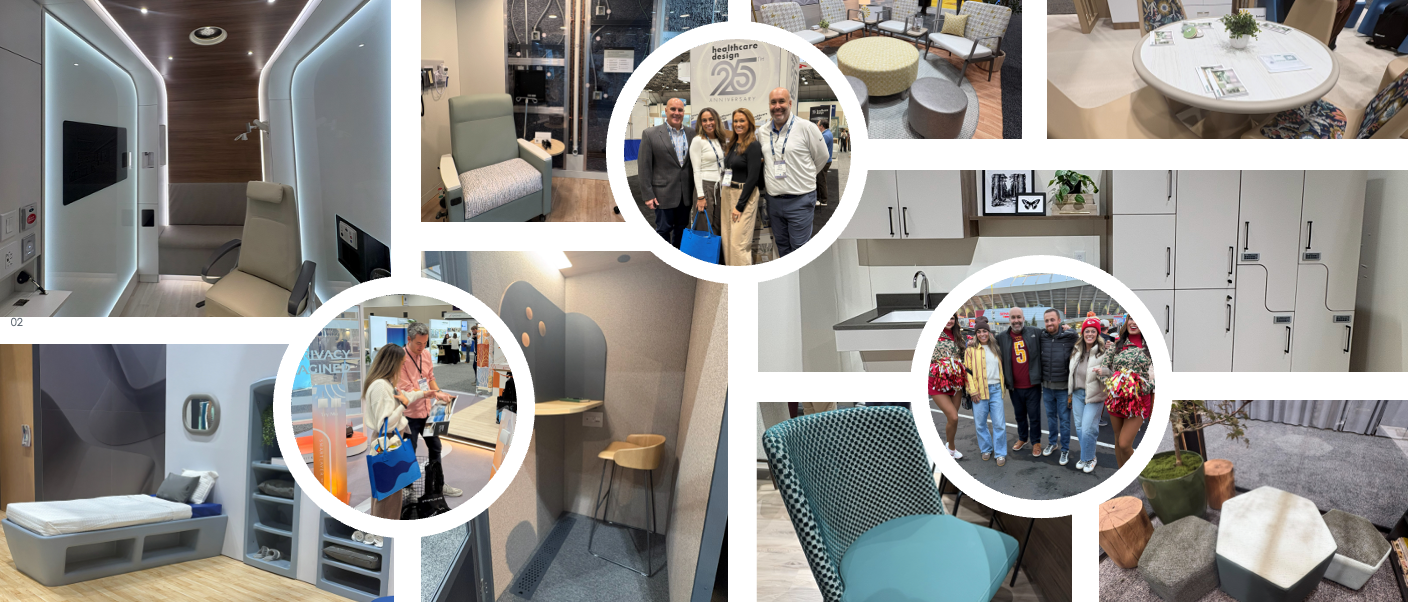
The 2025 Healthcare Design Conference + Expo (HCD) once again proved why it remains the premier event for professionals transforming care environments across the country. As the leading platform for networking, education, and product innovation, HCD brings together visionaries in healthcare planning, design, construction, and operations to explore cutting-edge trends reshaping experiences for patients, families, and care teams.
Our team returned from this year’s conference inspired by the groundbreaking innovations and human-centered solutions on display. Here are the most significant trends and takeaways that will define the future of healthcare design for everyone who enters a healthcare facility.
Transforming Healthcare Spaces: Eight Revolutionary Trends from HCD 2025
1. Welcome Lounges: Redefining First Impressions for Patients and Families
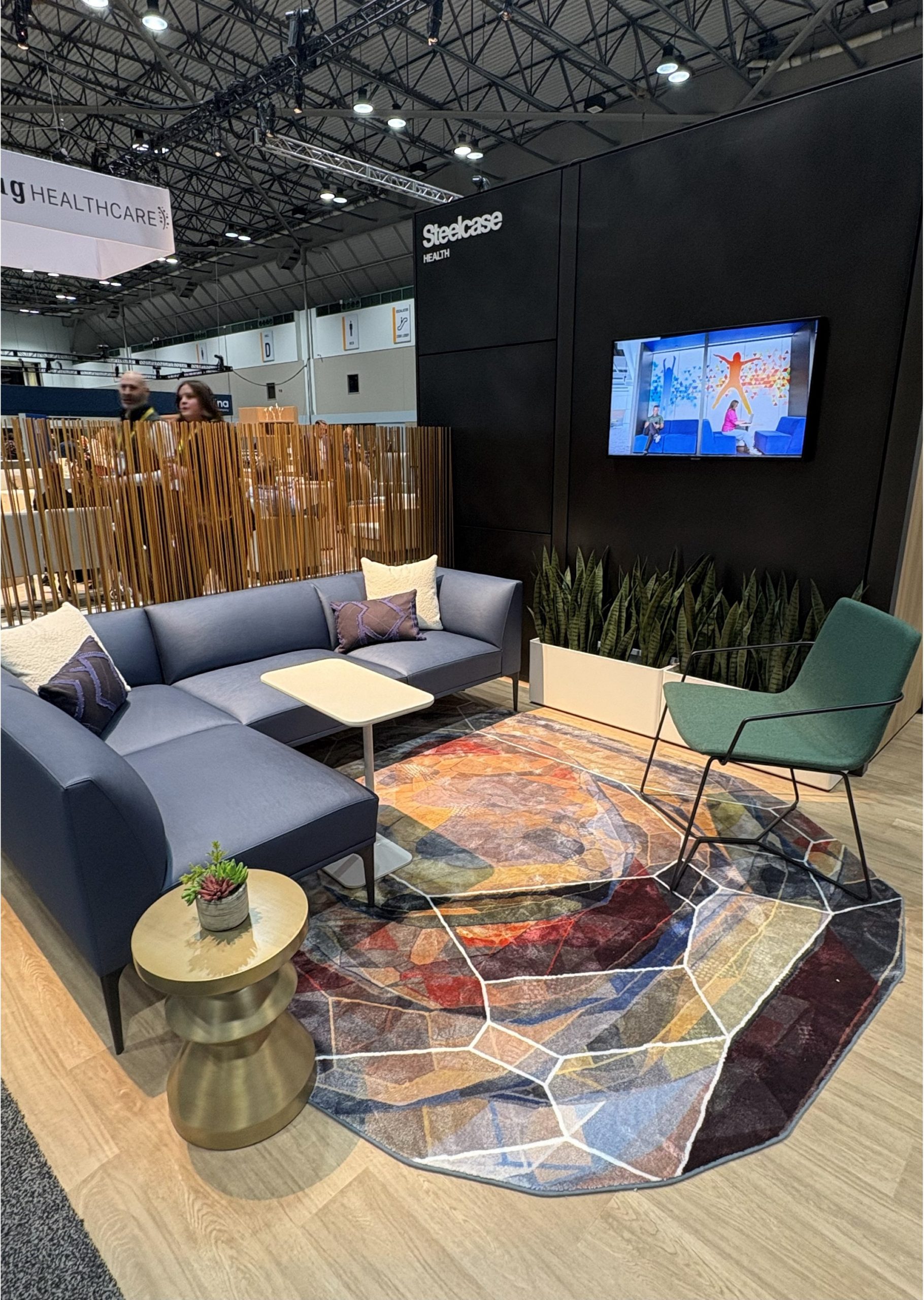
The era of sterile, anxiety-inducing waiting rooms is ending. Forward-thinking healthcare facilities are embracing welcome lounges—hospitality-inspired spaces that transform the arrival experience for both patients and their care partners.
These thoughtfully designed environments feature:
- Diverse seating options accommodating various comfort preferences and mobility needs for patients and family members alike
- Warm, ambient lighting that promotes relaxation for everyone in the healthcare journey
- Inviting décor that reduces pre-appointment stress for patients and the loved ones supporting them
- Comfortable furnishings that make patients, families, and care partners feel valued
This fundamental shift recognizes that the care experience begins the moment patients and their families walk through the door, setting a positive tone for their entire visit. Family members waiting alongside patients benefit equally from these welcoming environments, helping them manage their own stress while supporting their loved ones.
2. Patient-Centered Design: Empowering Comfort and Control for All
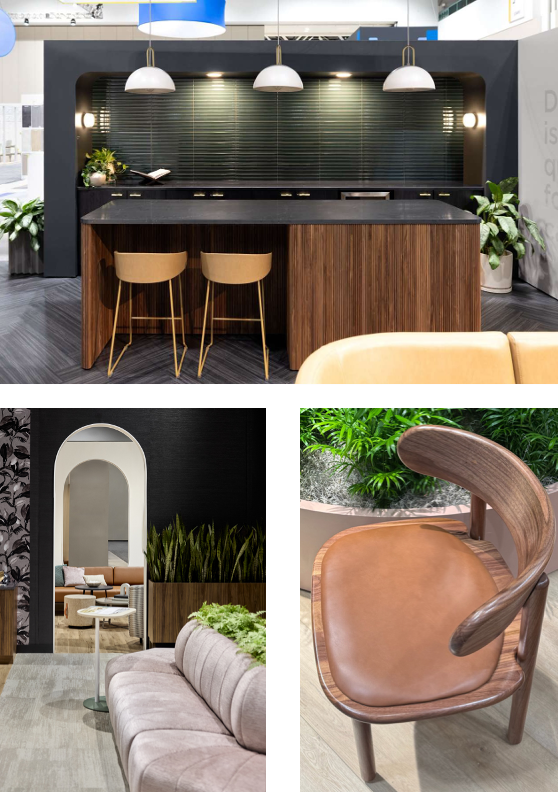
Today’s healthcare design prioritizes emotional wellness alongside clinical excellence. Leading facilities are creating healing environments through:
Residential-inspired color schemes that replace clinical whites with warm, soothing palettes that evoke home—creating calming atmospheres for patients, care partners, and families throughout their healthcare journey
Biophilic design elements including living plants, abundant natural light, and organic textures that connect everyone with nature’s calming influence, reducing stress for patients and the family members who accompany them
Personalized environmental controls allowing patients to adjust lighting intensity, temperature, and seating positions to their preferences
These evidence-based design strategies work synergistically to reduce anxiety for patients and care partners, support faster recovery, and create spaces that feel less institutional and more nurturing for everyone involved in the care experience.
3. Material Innovation: Sustainable Aesthetics Meet Performance 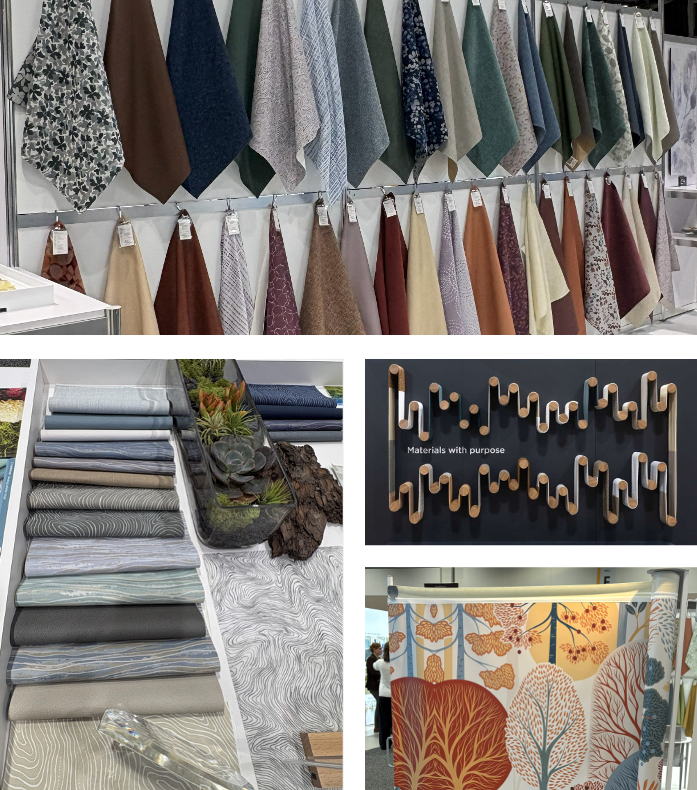
The healthcare design community is moving decisively toward soft, inviting finishes that prioritize both patient comfort and environmental responsibility.
Gone are the days of cold, clinical surfaces. Today’s materials embrace:
- Natural wood tones and textures
- Warm, tactile fabrics
- Earth-inspired color palettes
Standout innovations like Hyphyn—a biodegradable performance vinyl—demonstrate that sustainability and durability no longer require compromise. These advanced materials deliver the resilience healthcare environments demand while reducing environmental impact and creating more welcoming spaces.
4. Modular Design: Building Adaptability into Healthcare Infrastructure 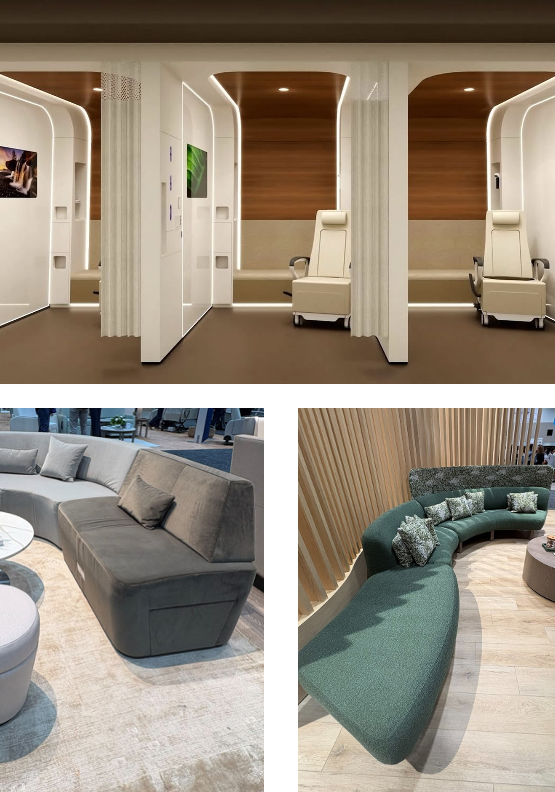
As care models evolve rapidly, modular architecture and flexible furniture systems have become essential tools for future-proofing healthcare facilities.
Key advantages of modular design include:
- Rapid reconfiguration to accommodate changing care delivery models
- Significant cost savings by eliminating major renovation expenses
- Enhanced responsiveness to emerging technologies and treatment protocols
- Extended facility lifespan through adaptable infrastructure
Interchangeable, reconfigurable components allow healthcare organizations to evolve their spaces as quickly as medicine itself advances—ensuring facilities remain relevant and functional for decades.
5. Technology Integration: Enhancing Care Through Innovation 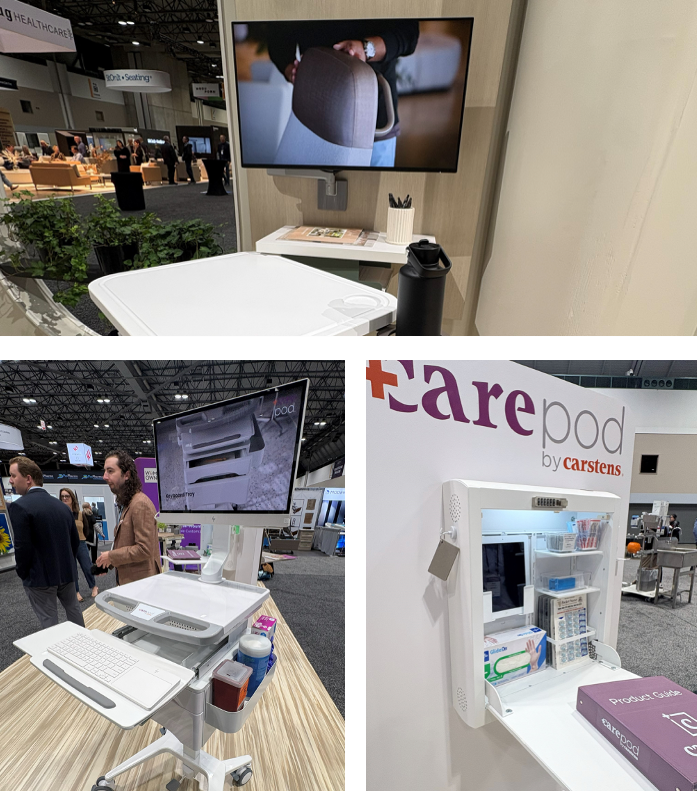
Smart technology continues revolutionizing both patient experiences and clinical workflows. Two particularly impactful innovations showcased at HCD include:
Telehealth integration that expands healthcare access, improves convenience, and supports continuity of care across physical and virtual settings
AI-powered ambient clinical documentation that automatically captures visit notes, freeing clinicians from administrative burden and allowing them to maintain meaningful eye contact and connection with patients
These technologies represent a fundamental shift: using innovation not to distance clinicians from patients, but to give them more time for the human connections that define excellent care.
6. Clinician Wellbeing: Designing Spaces That Support Care Teams
A critical trend emerging at HCD 2025 recognizes that exceptional patient care begins with supported, thriving care teams. Healthcare facilities are moving beyond afterthought staff areas to create purposeful clinician respite spaces that prioritize staff wellbeing and combat burnout.
Progressive organizations are implementing:
- Dedicated staff wellness areas with comfortable, quality furnishings—not leftover furniture and stacking chairs
- Calming design elements including soft color palettes, natural light, and biophilic features
- Quiet zones where clinicians can decompress between patient interactions
- Ergonomic work areas that reduce physical strain during documentation and planning
- Spaces designed with the same care and attention given to patient areas
This focus on clinician experience isn’t just compassionate—it’s strategic. Staff wellbeing directly influences the quality of patient interactions, clinical outcomes, and the overall impression patients have of their care. When healthcare professionals work in environments that support their physical and emotional needs, everyone benefits.
7. Neurodiversity-Inclusive Design: Creating Spaces for Every Mind 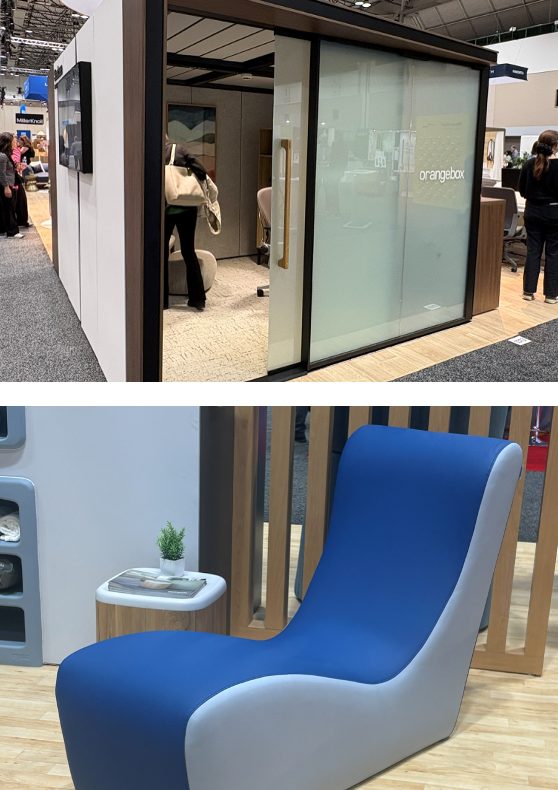
Designing for neurodivergent patients and staff has evolved from optional consideration to essential design standard. Progressive healthcare facilities are implementing:
- Adjustable, dimmable lighting systems that accommodate sensory sensitivities
- Calming color palettes that reduce visual overstimulation
- Designated quiet zones with superior acoustical control
- Scent-free policies protecting those with sensory sensitivities
- Intuitive wayfinding with clear signage and predictable spatial layouts
- Sensory-friendly technology that helps regulate environmental stimulation
These inclusive design principles benefit everyone—creating calmer, more comfortable environments that support diverse neurological profiles and reduce stress for all patients, families, and care teams.
8. The Holistic Vision: Integrating Wellness into Every Design Decision
The overarching theme connecting all these trends is clear: exceptional healthcare design balances clinical function with human experience. The most successful facilities recognize that healing happens not just through medical intervention, but through environments that support dignity, comfort, and emotional well-being for patients, families, and care teams alike.
The Path Forward: Designing Healthcare for Tomorrow
The 2025 Healthcare Design Conference + Expo reinforced that the future of healthcare environments lies in spaces that are flexible, technology-enabled, inclusive, and fundamentally human-centered. As patient expectations evolve and care models transform, design must lead the way in creating environments that support both clinical excellence and human flourishing—for everyone who enters a healthcare facility.
At dancker, we’re committed to bringing these insights to life—partnering with healthcare organizations to create spaces where innovation meets compassion, and where every design decision serves the ultimate goal: better care for every patient, supported families, and thriving care teams.
Looking to transform your healthcare environment with these cutting-edge design principles?
Connect with dancker’s healthcare design experts to explore how we can help you create spaces that elevate care and inspire healing for patients, families, and clinicians alike.
Download the 2025 HCD Solutions Guide