
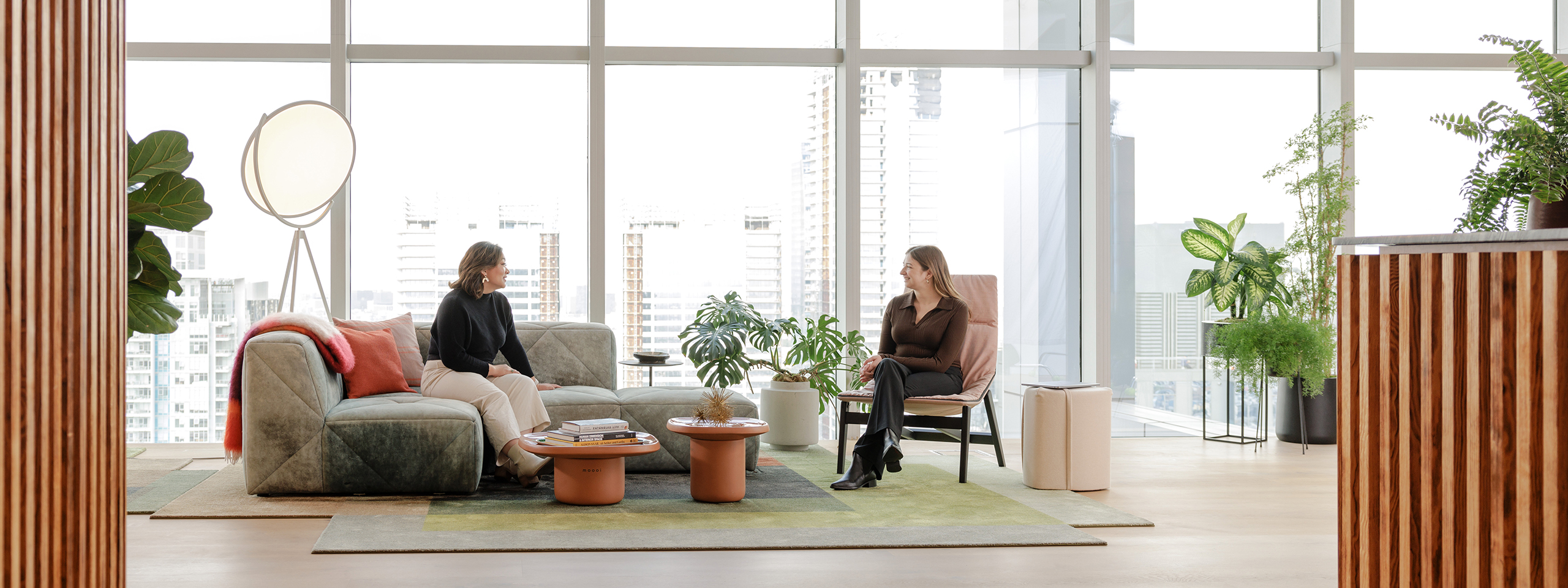
How the built environment shapes wellbeing — and what it takes to deliver spaces that actually work
April is Stress Awareness Month. For nearly two centuries, dancker has been in the business of making spaces work for the people inside them. This month, we’re thinking about what it really means to design for human flourishing — and what separates spaces that promise it from spaces that deliver it.
April is when the conversation about workplace stress gets louder. Articles multiply. HR teams dust off their wellness program decks. Executives nod in the right places during all-hands meetings. And then, often, not much changes.
But for the organizations we work with — forward-thinking leaders in commercial real estate, healthcare, higher education, and the corporate sector — the conversation about stress is not a seasonal one. It’s an urgent, ongoing design challenge. Because stress does not live only in people’s minds. It lives in the spaces they inhabit.
The lighting that flickers. The acoustics that make every phone call feel like a public performance. The layout that forces a 12-minute walk just to find a quiet spot to think. The lobby that greets patients with institutional gray and fluorescent hum instead of warmth and calm. These are not neutral conditions. They are choices — and they have consequences.
The emerging body of evidence on the built environment and wellbeing is not ambiguous: physical space is a determinant of stress, belonging, cognitive performance, and community formation. The question for organizations is not whether their spaces matter. It’s whether the spaces they have were actually delivered to do what their designers intended.
That gap — between a brilliant design and a functioning reality — is where dancker works.
Why Great Design Isn’t Enough
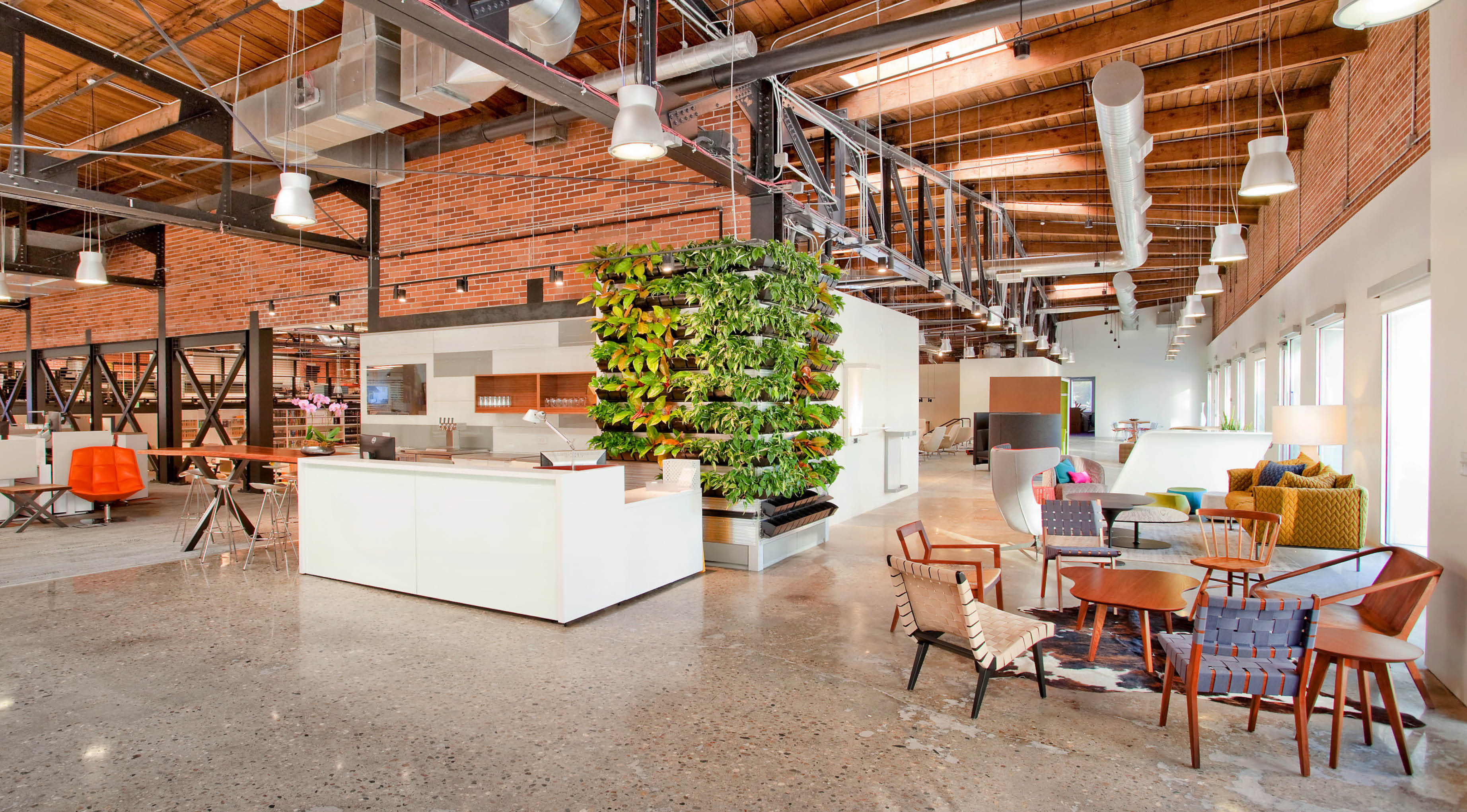
The architecture and interior design community has never been more sophisticated about human-centered environments. Concepts like biophilic design, activity-based working, restorative spaces, and social infrastructure are now mainstream in planning conversations. Firms are producing visionary plans for spaces that should draw people together, reduce cognitive load, support belonging, and give people the conditions to feel — and perform — at their best.
And yet, a depressing number of those visions don’t survive contact with reality.
Furniture arrives late, or wrong, or both. Integrated technology systems don’t talk to each other. Acoustical elements get value-engineered out late in the process. A prefabricated architectural element that was meant to define a space gets substituted for something generic because the construction and interiors teams weren’t coordinated. A space designed to feel open and welcoming becomes a cavern of hard surfaces and disconnected zones. The nurse station that was supposed to reduce steps and stress becomes a bottleneck. The collaboration hub that was meant to spark spontaneous connection becomes a storage room because nobody ordered the right screens.
This is not a design failure. It’s a delivery failure. And it’s one of the most common — and most costly — problems in commercial interiors.
The stress it creates isn’t just for the end users of those spaces. It’s for the clients, the design partners, and the project teams who poured months of intention into something that came apart in execution.
What Integration Actually Means
When dancker talks about integrated solutions, we mean something specific — and it’s worth unpacking, because the word “integrated” gets used to describe almost everything these days.
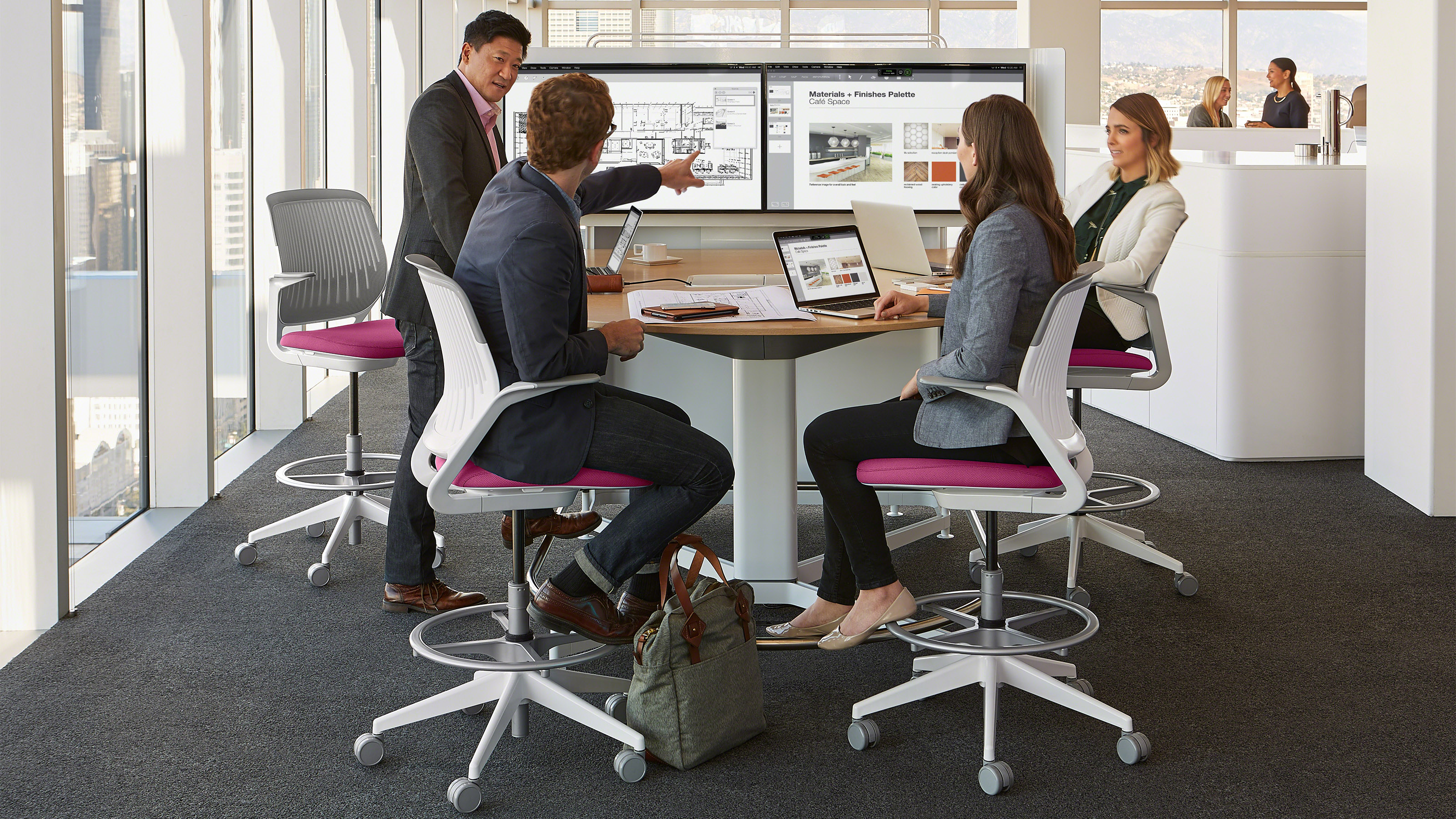
For us, integration means that construction, furniture, technology, logistics, and space activation are not managed as parallel workstreams that happen to converge at substantial completion. They are planned, procured, and delivered as a unified system — with a single team that holds the thread across the entire lifecycle of a project.
That team is made possible by dancker’s community of specialized brands: ForBuild, our specialty construction division; our furniture practice; DBE Systems, our integrated technology contractor; and d’ploy, our logistics and asset management team. Each brings deep expertise in its own discipline. Together, they operate as one delivery system — and that distinction matters more than it might first appear.
Construction as a design tool, not a constraint. ForBuild, dancker’s specialty construction division, expands what’s possible before a single piece of furniture is specified. Prefabricated solutions — from walls and architectural elements to custom millwork and specialty structures — give design teams a level of flexibility that traditional construction often can’t accommodate. When a design calls for a distinctive spatial configuration, a unique enclosure, or a feature that would take months to build and deliver through conventional means, ForBuild opens options. The result is a built environment that can more faithfully express the design intent — and respond to it with fewer compromises.
Furniture as more than product. The pieces matter, of course. But what matters more is whether they are specified, delivered, installed, and managed in a way that faithfully executes the design intent. That requires deep fluency with how designers think — and a practice capable of sourcing solutions across every category, price point, and performance requirement, for environments ranging from open collaboration to focused enclosure to restorative retreat.
Technology as infrastructure for human experience. Integrated technology in the modern built environment is not a feature. It is the connective tissue of how a space functions. DBE Systems, our integrated technology contractor, plans and delivers the full range — display systems, conference room infrastructure, wayfinding, acoustical solutions, lighting controls — as a unified system rather than a collection of independent installs. When technology is coordinated from the start, it amplifies the design. When it’s bolted on after the fact, it undermines it.
Logistics as a design discipline. How furniture and equipment move through a building — staged, sequenced, installed, activated — is a design problem. So is what happens to legacy assets when new product arrives. d’ploy, our logistics and asset management team, manages that transition so it happens cleanly, without disruption to the communities living and working in those spaces.
Activation as the beginning, not the end. Too many projects treat move-in day as the finish line. We treat it as the starting point. A space that draws people together doesn’t do that automatically. It does it because the conditions for community formation have been understood, designed for, and sustained over time.
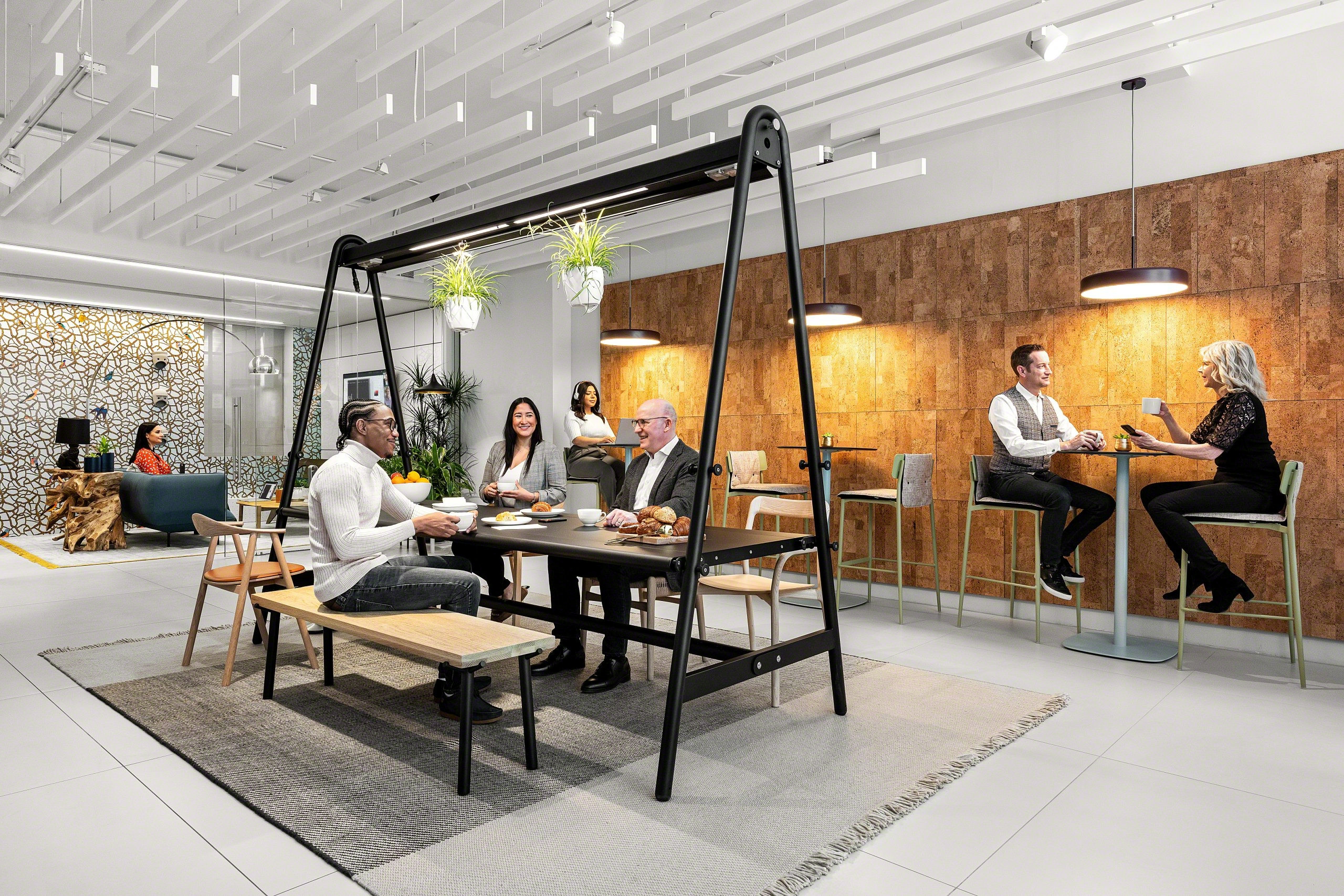
Designing for Stress Reduction Requires More Than Good Intentions
Stress-informed design is a growing discipline, and the principles are well-established. Spaces that reduce stress tend to offer:
- Acoustic variety— the ability to choose between privacy and connection, and to trust that those zones will perform as intended
- Biophilic elements — natural light, views to the outside, living materials, and organic form that connect people to the rhythms of the natural world
- Legibility — environments that are easy to navigate and understand, reducing the cognitive load of simply being there
- Agency — the ability to control one’s immediate environment, whether that means adjusting light, temperature, or the degree of enclosure
- Social infrastructure — designed thresholds between public and private, between focus and collaboration, that make spontaneous connection feel natural rather than forced
These principles are not difficult to find. What is difficult is maintaining fidelity to them through a procurement and delivery process that involves dozens of vendors, multiple trades, compressed timelines, and the inevitable entropy of a large construction project.
That’s the work. That’s where dancker’s model makes the difference.
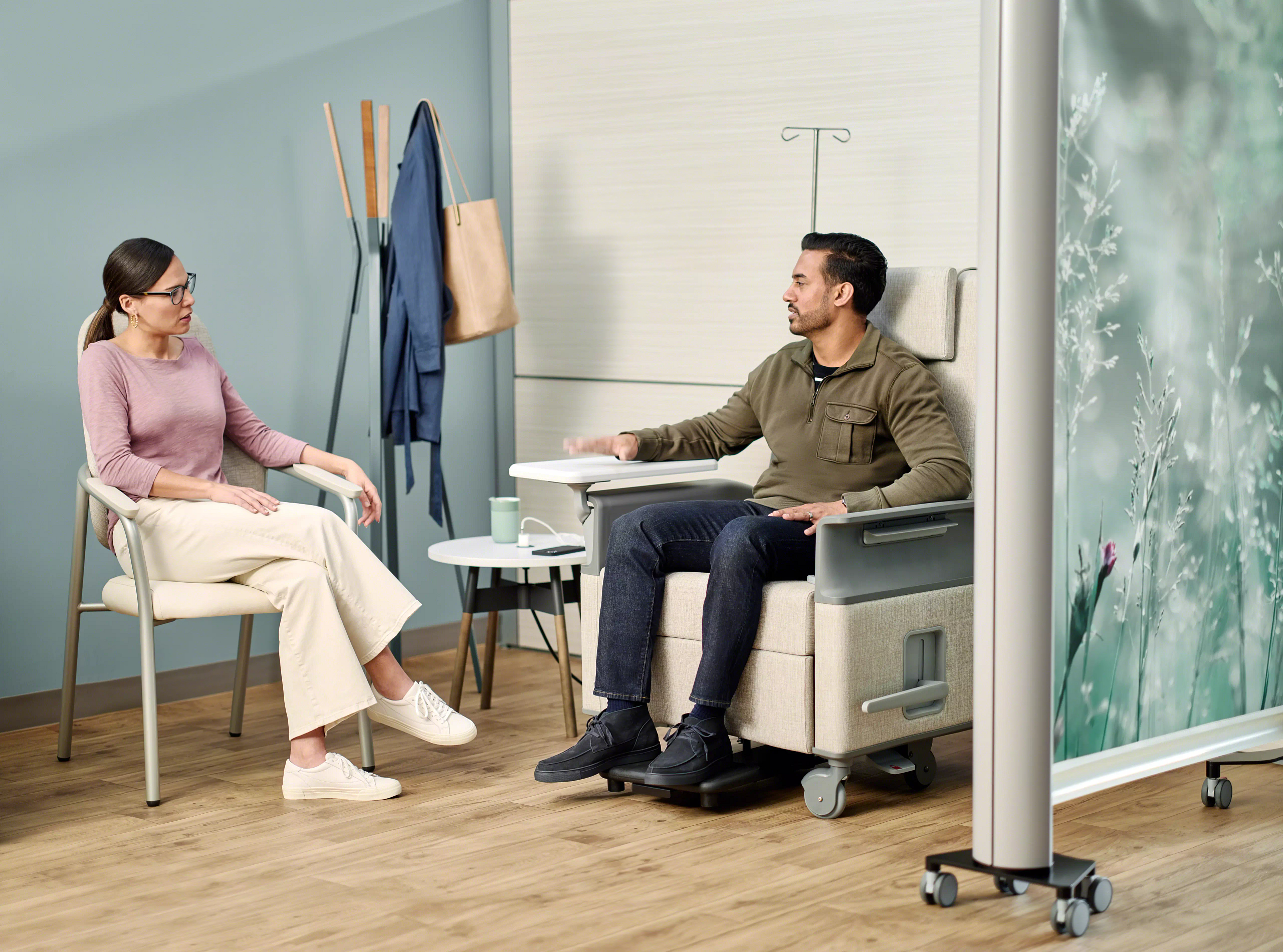
What This Means for Your Next Project
If you’re in the planning stages of a significant space project — a campus renovation, a new healthcare facility, a corporate headquarters redesign — here is the question we’d invite you to sit with:
Who is responsible for the gap between design intent and delivered reality?
If the answer is unclear, or if the answer is “everyone and therefore no one,” that gap will cost you. It will cost you budget overruns, timeline delays, and the slow erosion of a design vision that your team spent months building. But most importantly, it will cost you the experience of the people your space was built to serve.
Stress doesn’t just happen inside people. It happens in spaces. And the organizations that understand this — that treat space as a strategic lever for culture, belonging, and human performance — are the ones that build environments where people don’t just work. They thrive.
That’s the vision your design partners brought to the table. Our job is to make sure it lives in the walls.

Planning a Project? Here’s Where to Start.
For organizations evaluating a new space initiative, these conversations are worth having early:
- Bring your delivery partner into the design conversation sooner than feels natural. The earlier an integrator is at the table, the more likely that design intent survives procurement and installation intact. We work closely with architecture and design firms not to constrain the vision, but to make it buildable.
- Define “success” for the people inside the space, not just the project. What should someone feel when they walk in? What behaviors do you want the space to support? What conditions need to exist for your community to form? These questions should drive the brief.
- Understand what “integrated” means in your vendor proposals. When a partner says they offer integrated solutions, ask them: integrated how? Who holds accountability across construction, furniture, technology, and logistics? What happens when those workstreams conflict?
- Plan for the life of the space, not just the opening day. How will assets be managed? What happens when the space needs to evolve? The best spaces are designed to adapt — and the best partnerships are built to support that adaptation over time.
April is a good time to think about stress. But the real opportunity is in what you build before it arrives.
dancker is a commercial interiors integrator that has been co-creating spaces with clients and their design partners since 1829. Our integrated solutions span specialty construction, furniture, technology, and logistics — delivered through a community of specialized brands: ForBuild, DBE Systems, and d’ploy. Together, we serve every environment, scale, and vision.
Ready to talk about your next project? Contact our team.